Research
My research interests are mainly in nonlinear dynamics and its applications.
- Hybrid systems: switched systems, piecewise isometries, billiard systems, etc.
- Many-body dynamics: phase transitions, spatio-temporal chaos, etc.
- Dynamics and computation: deterministic sampling algorithms
- Applications to mathematical modeling: brain and nervous systems, electric power systems, epidemic models, etc.
Research Highlights
Below are summaries of selected research results. Generated with AI. Please refer to the papers for accurate information.
A convolutional perspective on solving optimization problems with light
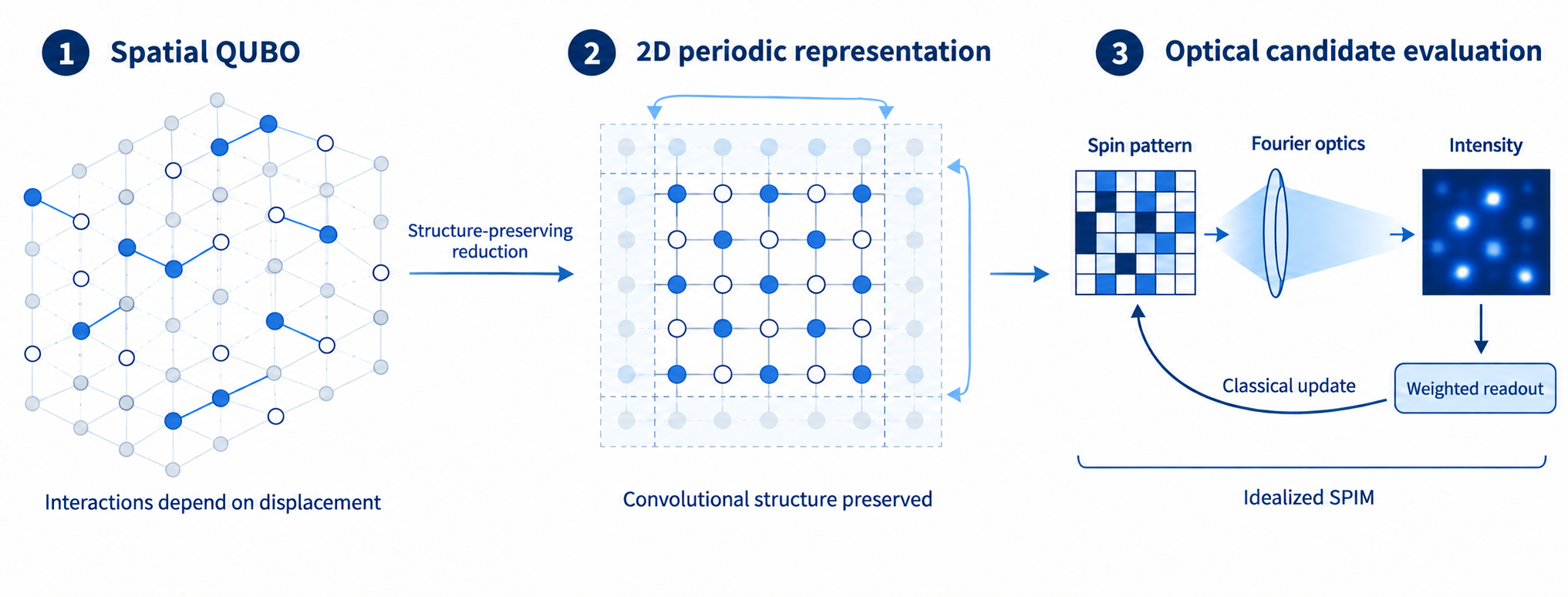
Communications Physics, 2026
When many variables interact according to a shared spatial rule, that structure can be useful. This paper introduces a convolutional formulation called spQUBO and clarifies its correspondence with spatial photonic Ising machines.
Combining optical computations to broaden the problems a machine can tackle
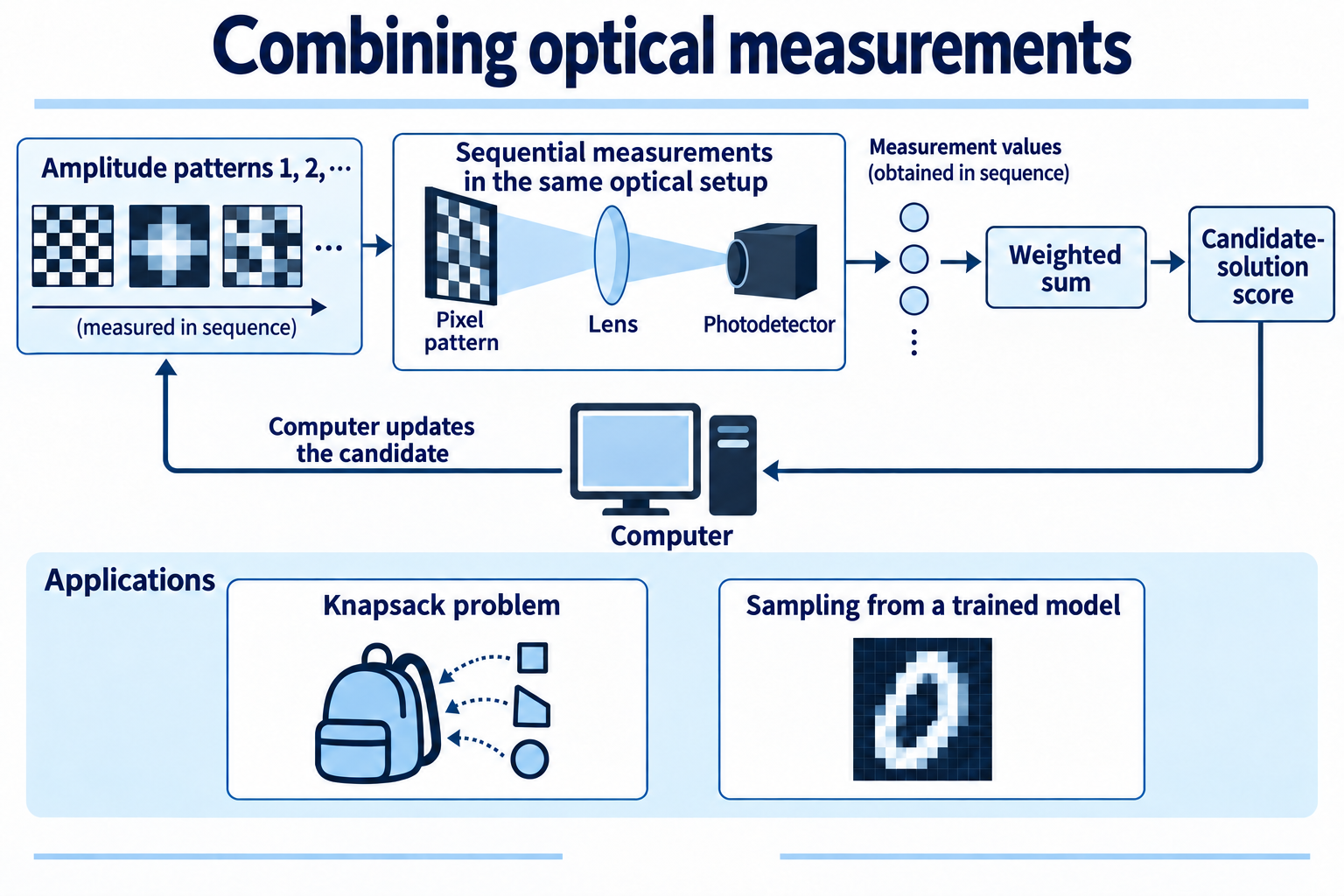
Physical Review Letters, 2023
Sequential measurements with different amplitude patterns are combined in a weighted sum. This extends spatial photonic Ising machines to low-rank interactions, with applications to optimization and statistical learning.
Building probability models from statistics by combining distributions
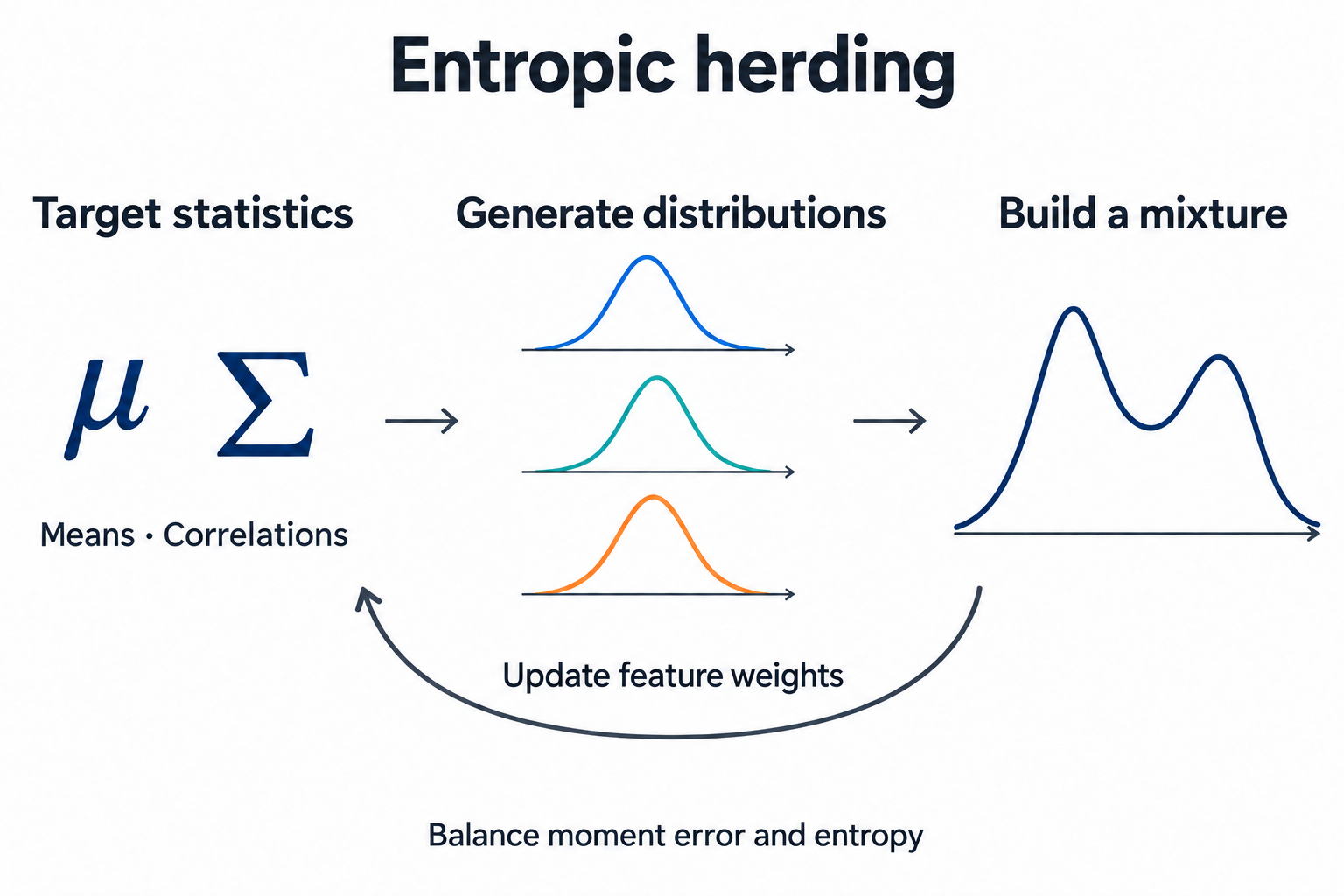
Statistics and Computing, 2023
Entropic herding combines tractable distributions to model specified statistics, clarifying the connection between herding and the maximum entropy principle.
Can HMC adapt its step size while preserving the target distribution?
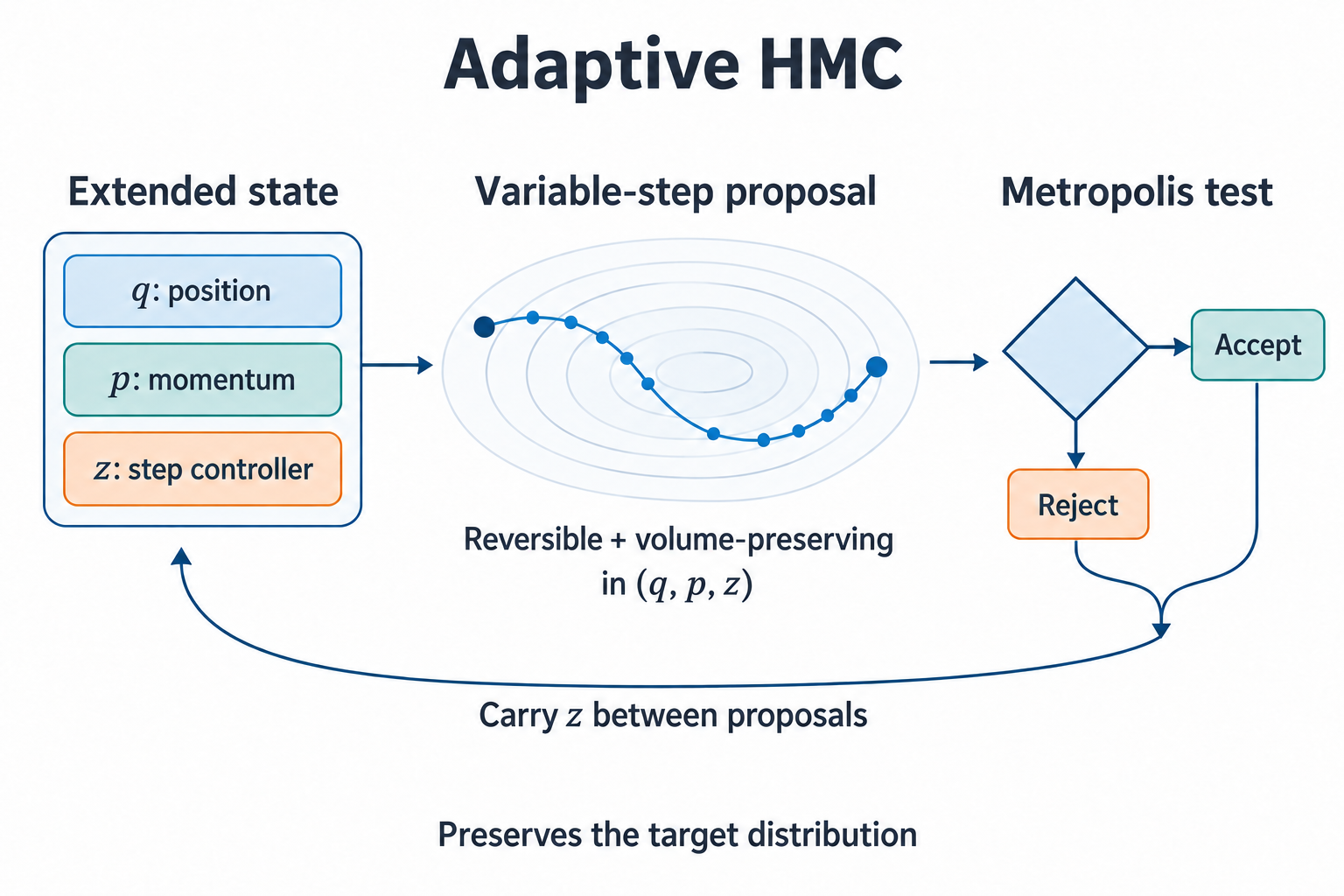
JSIAM Letters, 2017
2018 Paper Award, Japan Society for Industrial and Applied Mathematics
Making the step-size controller part of the sampled state allows adaptive HMC integration that is reversible and volume-preserving in an enlarged state space.
Can deterministic dynamics perform probabilistic computation?
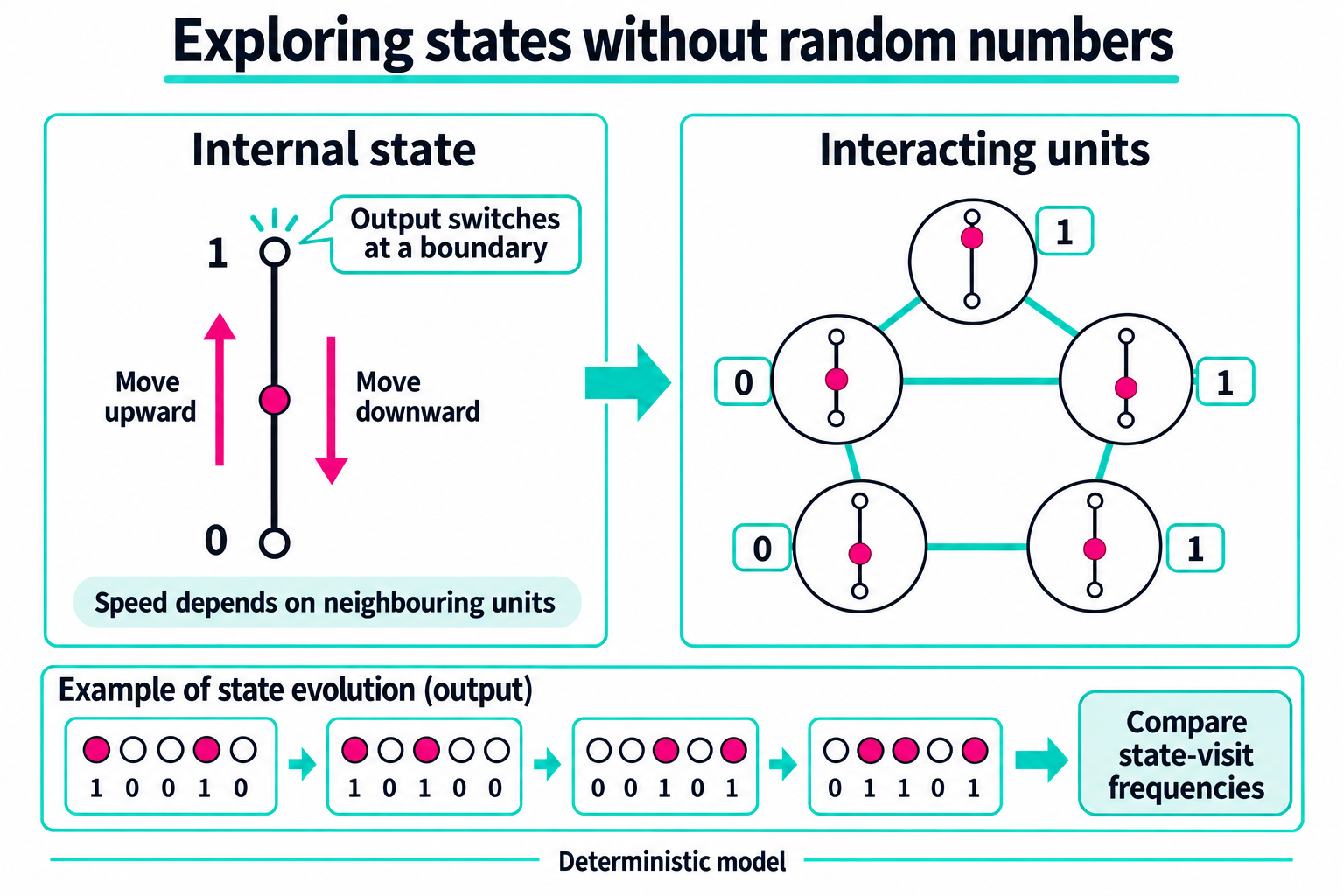
Scientific Reports, 2013
Can a Boltzmann machine work without random numbers? This study replaces stochastic updates with continuous motion and discrete switching, then tests the resulting deterministic model numerically.
Chaos arising from interacting traffic signals
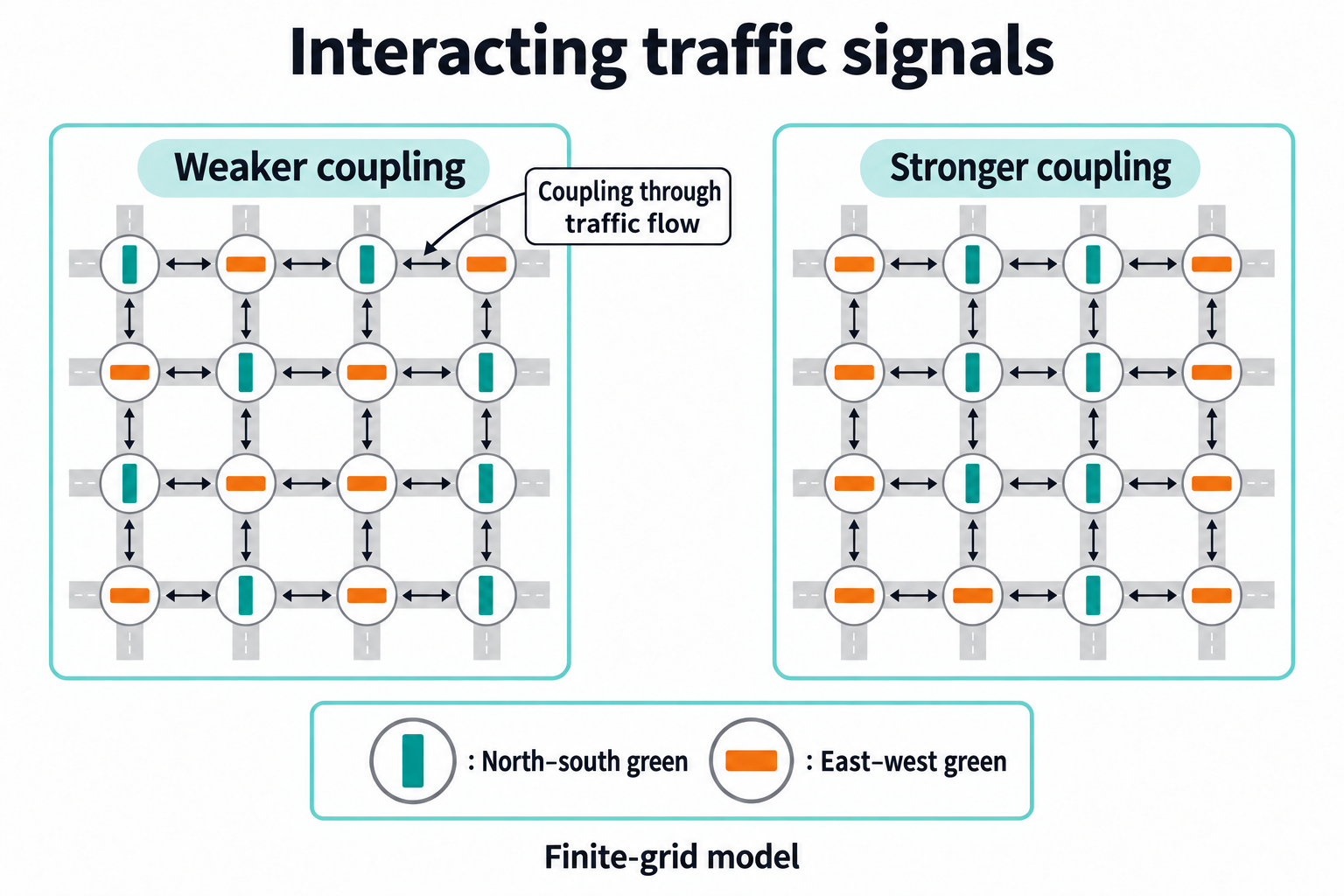
Scientific Reports, 2013
Traffic lights responding to local queues influence one another through traffic flow. A deterministic grid model reveals chaos and collective behaviour resembling that of an Ising model.
Understanding double rotations through reduction to the same form
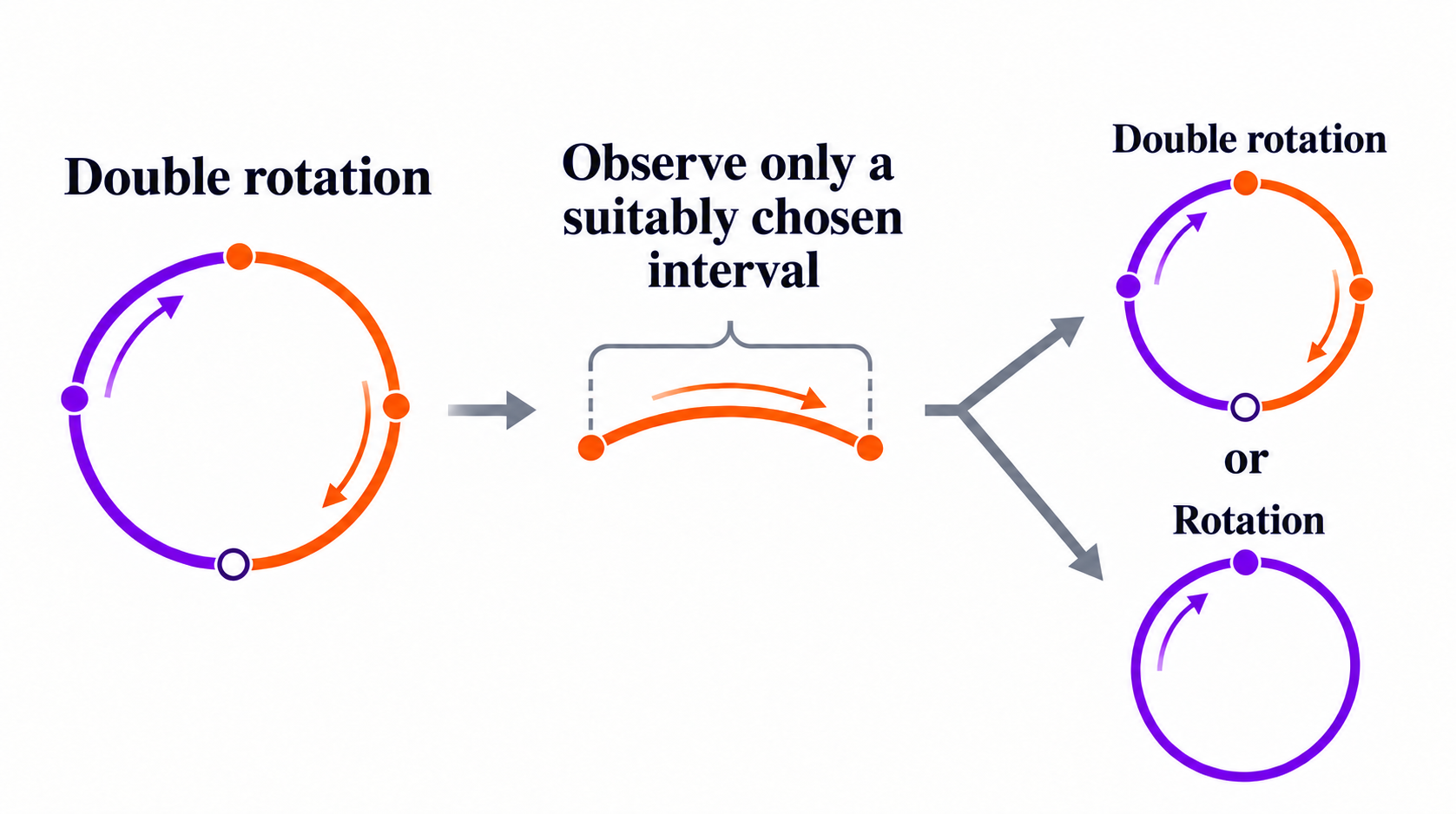
Discrete and Continuous Dynamical Systems, 2005
Taking a return map can produce another double rotation. Repeating this reduction reveals self-similar complexity in parameter space.
Why can a simple partial-discharge model behave so intricately?
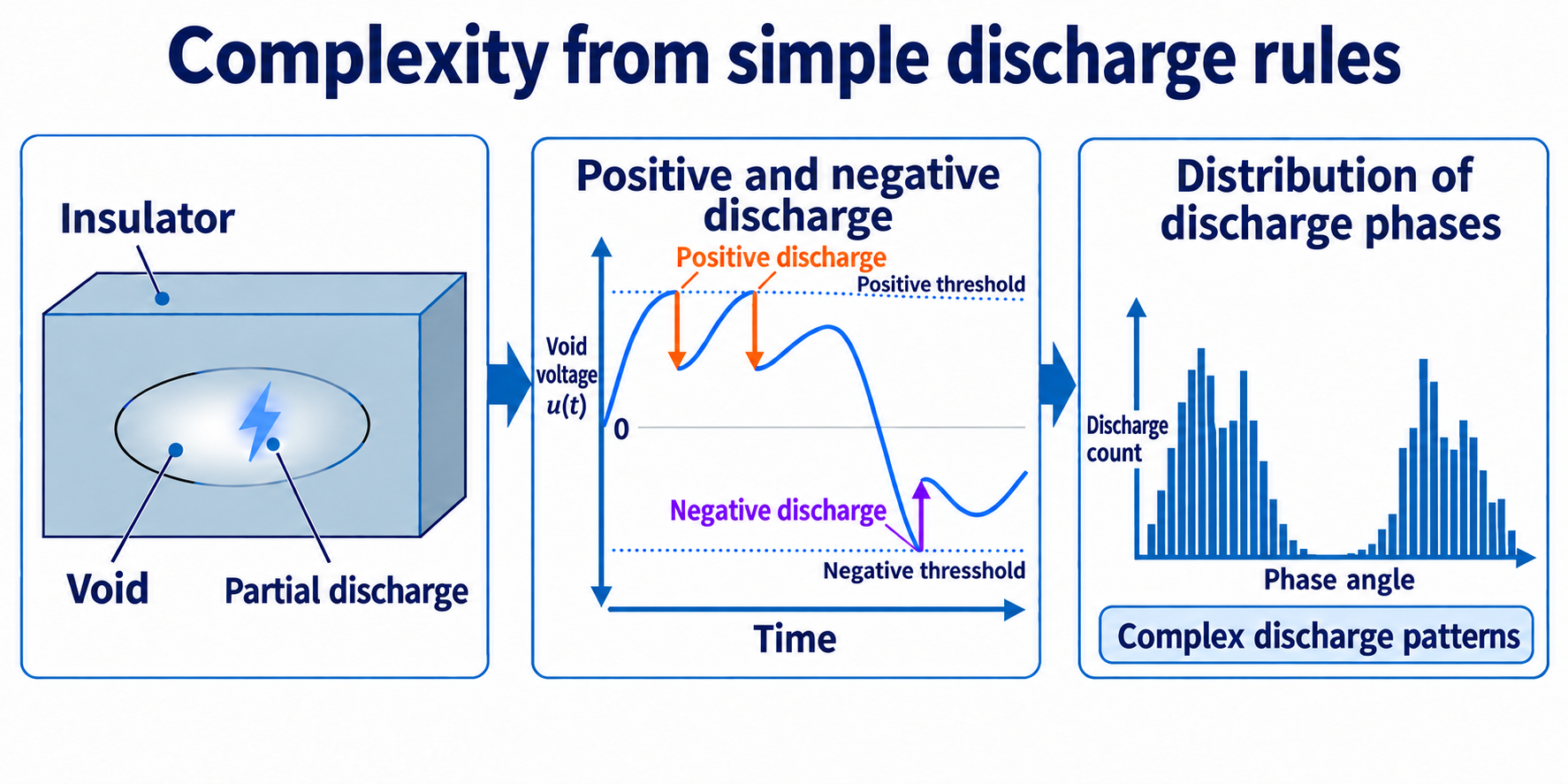
Europhysics Letters, 2004
Even a simple equivalent circuit with fixed parameters can produce intricate partial-discharge behaviour. Analysis using double rotations and a preliminary experiment examine positive discharges per cycle and the distribution of discharge phases.